.png)

Updated In March 2026
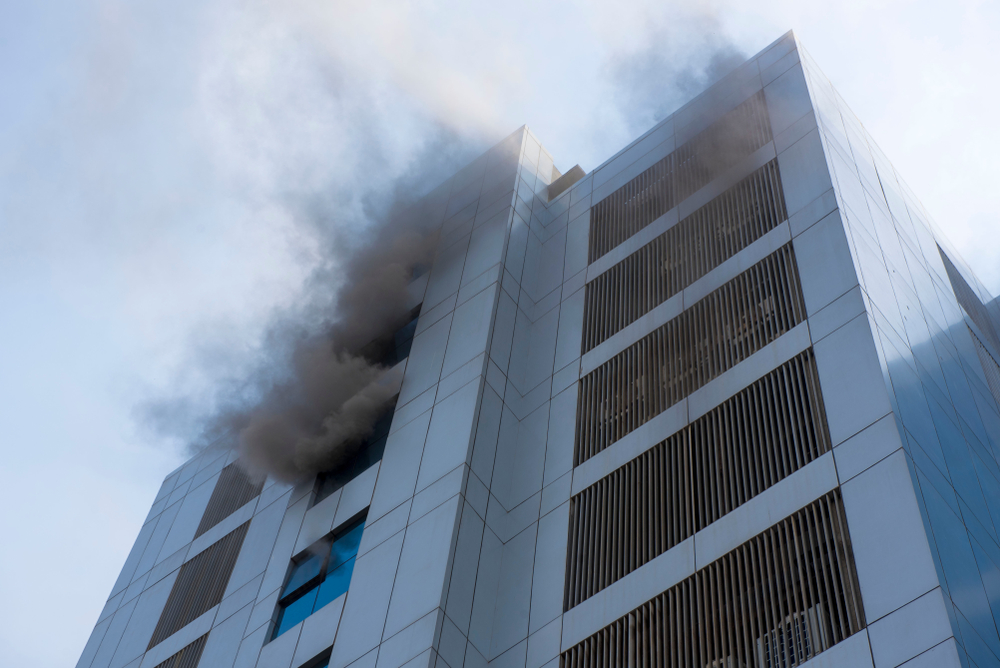
Damage to a building that you own is not something you generally look forward to, but both the Municipal Act, 2001 and the City of Toronto Act, 2006 allow property owners to apply for property tax relief when a building is destroyed or significantly damaged.
As discussed in our earlier post on Applying for a Refund, these statutes allow municipalities to cancel, reduce, or refund taxes when certain events affect the usability of a property.
Property Tax Refunds Under Section 357 of the Municipal Act
Subsection 357(1) of the Municipal Act, 2001 and subsection 323(1) of the City of Toronto Act, 2006 are identical and state:
(1) Upon application to the city treasurer made in accordance with this section, the City may cancel, reduce or refund all or part of taxes levied on land in the year in respect of which the application is made if…
(d) during the year or during the preceding year after the return of the assessment roll, a building on the land,
(i) was razed by fire, demolition or otherwise, or
(ii) was damaged by fire, demolition or otherwise so as to render it substantially unusable for the purposes for which it was used immediately prior to the damage…
Case Example - Canadian Property Holdings (Ontario) Inc.
The Assessment Review Board considered the damaged by demolition or otherwise provision in Canadian Property Holdings (Ontario) Inc. v Municipal Property Assessment Corporation, Region 15.
That case involved significant construction at a former movie theatre. The property owner was gutting the theatre to turn it into a gym.
It applied to the City of Mississauga for tax relief under the above provision on the basis that the building was damaged by demolition.
Municipality’s Position - Renovation vs. Damage
The City denied relief to the taxpayer, saying that the property was not damaged by demolition, but was, rather, renovated.
Renovations are not always entitled to a refund, they may need to apply for a vacancy rebate instead, see subsection (1.1).
The property owner appealed the decision to the Assessment Review Board.
The Assessment Review Board’s Interpretation of “Damaged by Demolition”
The Board ultimately rules in favor of the taxpayer and determined that the taxpayer was entitled to a refund of taxes.
The Board held, at paragraph 36, that:
“‘damaged by demolition’ is a separate category from ‘razed by demolition’ which is accepted by both parties as destroyed to the ground. The meaning of ‘damaged by demolition’ is derived from the phrase ‘so as to render it substantially unusable for the purpose for which it was used immediately prior to the damage.’”
When Is a Building “Substantially Unusable”?
The Board went on to say, at paragraph 42, that a “building remains ‘substantially unusable’ until it is back in a state where it is usable again.” The question is “‘whether from an operational, physical or regulatory standpoint’ the building could not be utilized for the purpose for which it was used immediately prior to the damage.”
Two Categories of Property Tax Relief for Damaged Buildings
We agree with the scheme set out by the Board in Canadian Property Holdings. The Act clearly sets out two categories of relief that entitle a taxpayer to a refund as a result of damage.
Buildings That Are Completely Destroyed
Subclause (1)(d)(i) is for buildings that are totally destroyed. They can be destroyed in any way, but the examples given are by fire or demolition. Some other things that could totally destroy a building are floods, tornadoes, earthquakes, and other natural disasters.
Buildings That Are Damaged but Not Destroyed
Subclause (1)(d)(ii) is for buildings that are damaged in less significant ways. The threshold is that the damage makes a building substantially unusable for the purpose it was used for right before it was damaged. That would seem to include all of the situations to which subclause (1)(d)(i) would apply because a building that is totally destroyed is also substantially unusable.
This clause also could be relied on for damage caused by anything, but the examples given are again fire and demolition. Water damage could certainly make a space substantially unusable, as could various natural disasters that do not totally destroy the building.
Could Government Orders Be Considered “Damage”?
A question that has not yet been litigated before the Board is if closure by government order can be considered “damage.” A lockdown order can make certain properties, like ski hills, substantially unusable for what they were used for before the lockdown.
The question that remains to be tested is if a government order can be “damage.” The Board stated that regulatory impacts could be damage in Canadian Property Holdings. There is some reason to think that the Board could be convinced that a lockdown order is also damage.
Deadline to Apply for a Property Tax Refund
Applications for tax relief under these provisions must be filed by the last day of February of the year following the tax year in question.
Remember, the last day to apply for a refund for the 2026 tax year is February 28, 2027.
NextGenLaw LLP would be happy to help you in seeking a refund for your damaged properties. Contact NextGenLaw LLP today to see how we can help.